Exporting Indonesian cocoa to international markets requires strict adherence to defined quality, safety, and documentation standards. For global buyers, understanding these export standards is essential when selecting both a cocoa exporter and a cocoa powder supplier.
A professional cocoa powder supplier must not only provide consistent product specifications, but also demonstrate compliance with export regulations, food safety requirements, and traceability expectations. Without structured compliance systems, even high-quality cocoa may face delays, rejections, or regulatory challenges in destination markets.
By understanding the key export standards for Indonesian cocoa, buyers can evaluate a cocoa powder supplier more effectively and reduce risk in cross-border trade.
Moisture and Quality Specifications
Export-grade cocoa must meet defined moisture thresholds to ensure stability during storage and shipment.
Excess moisture increases the risk of mold growth and quality deterioration. In addition to moisture, buyers typically evaluate bean size, defect percentage, and overall grading standards.
For processed products, consistent fat content, particle size, and microbiological limits are critical compliance indicators.
Food Safety and Microbiological Standards
International markets enforce strict food safety regulations.
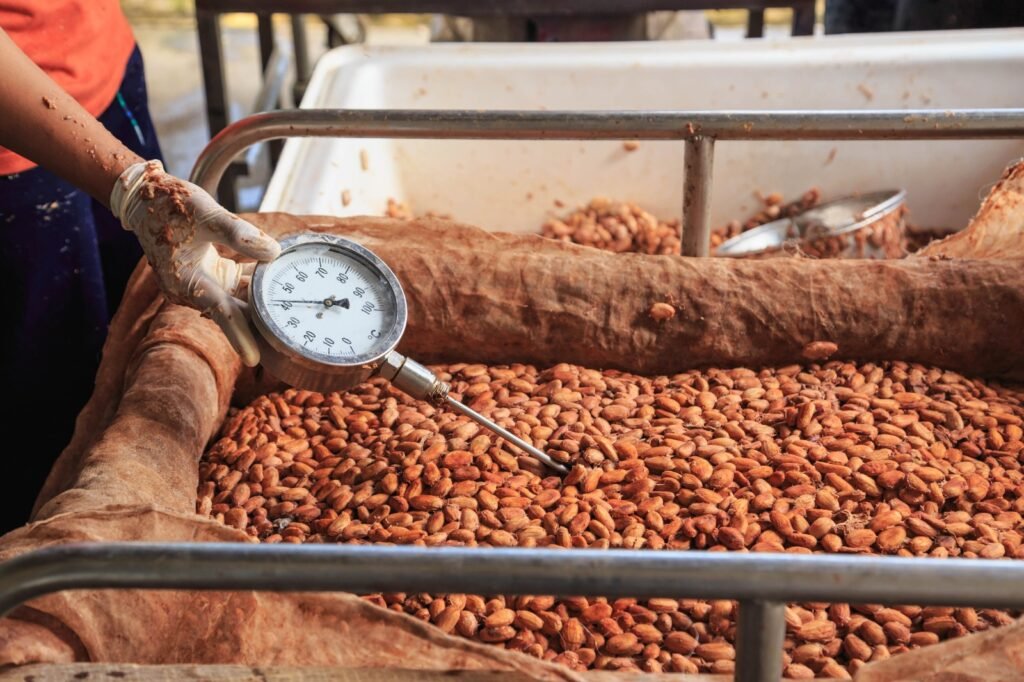
Export-ready cocoa must meet microbiological requirements, including limits on contaminants and pathogens. Regular laboratory testing and documented quality control procedures are essential components of export compliance.
A reliable supplier integrates food safety checks throughout the production process, not only before shipment.
Documentation and Traceability
Export standards extend beyond product specifications.
Accurate documentation—including certificates of origin, phytosanitary certificates, quality reports, and commercial invoices—is necessary for smooth customs clearance. Traceability systems also help buyers meet regulatory and customer expectations.
Professional exporters maintain structured documentation processes to prevent shipment delays.
READ MORE : THE BEST CHOCOLATE RECIPE
Packaging and Shipping Requirements
Packaging must protect cocoa during international transit.
Moisture-resistant materials, proper labeling, and container preparation all influence product condition upon arrival. Exporters serving global markets treat packaging as part of quality management.
Logistics discipline reduces the risk of contamination and damage.
Our Approach at Indonesian Cocoa
At Indonesian Cocoa, export standards guide every stage of our supply process.
We collaborate with structured sourcing partners and quality-focused processing facilities to ensure compliance with international requirements. Whether supplying cocoa beans or operating as a cocoa powder supplier, our priority is consistency, food safety, and documentation accuracy.
Our export systems are designed to support reliable global trade.
Final Thoughts
Understanding export standards is essential for buyers sourcing Indonesian cocoa.
Quality specifications, food safety compliance, traceability, and logistics discipline all contribute to successful international shipments.
If you are evaluating export-ready cocoa or assessing a cocoa powder supplier for global markets, Indonesian Cocoa is ready to support your sourcing requirements.
Contact our team to discuss compliance standards, documentation needs, and export solutions tailored to your business.